
Town of Salem
Town of Salem is a multiplayer social deduction game of secret roles, night actions and public trials. Find the Mafia, protect your faction or pursue a Neutral objective. Learn the rules, check all 49 roles and the Pestilence transformation, and turn each night’s evidence into a better vote.
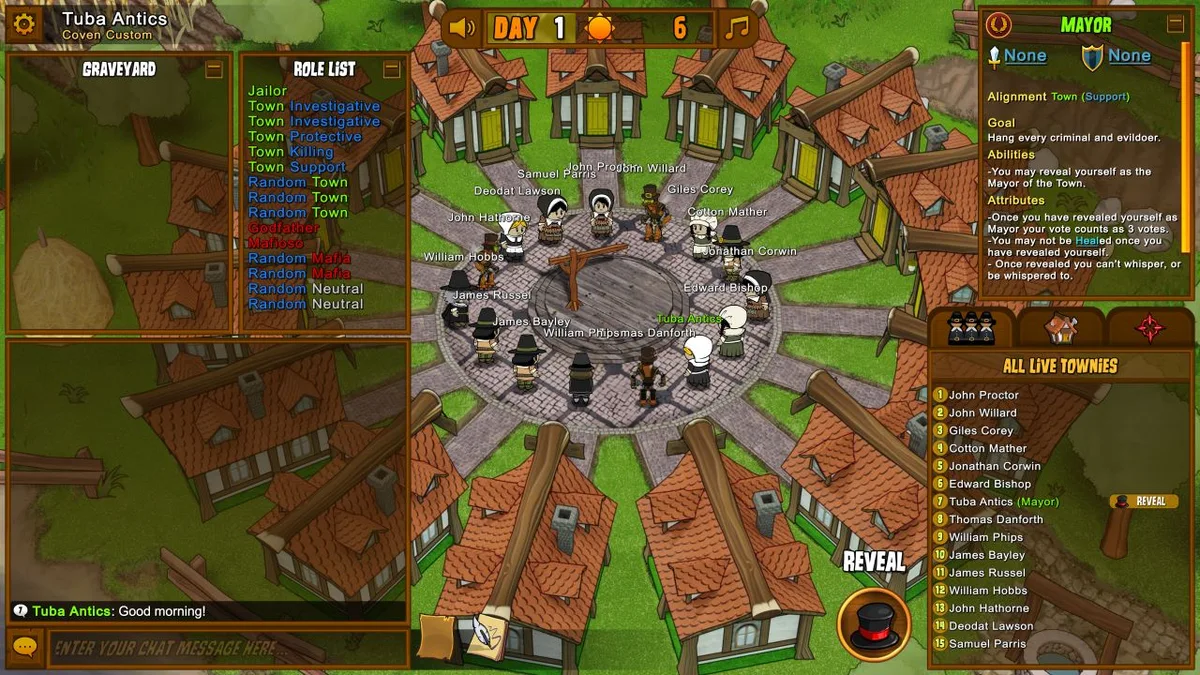
From hidden night actions to a public verdict
Town of Salem is not just a list of roles. It is a cycle of hidden actions, public claims, pressure, voting and information that becomes more valuable every time two independent stories collide.
Social deduction with roles, night abilities, a graveyard and public trials
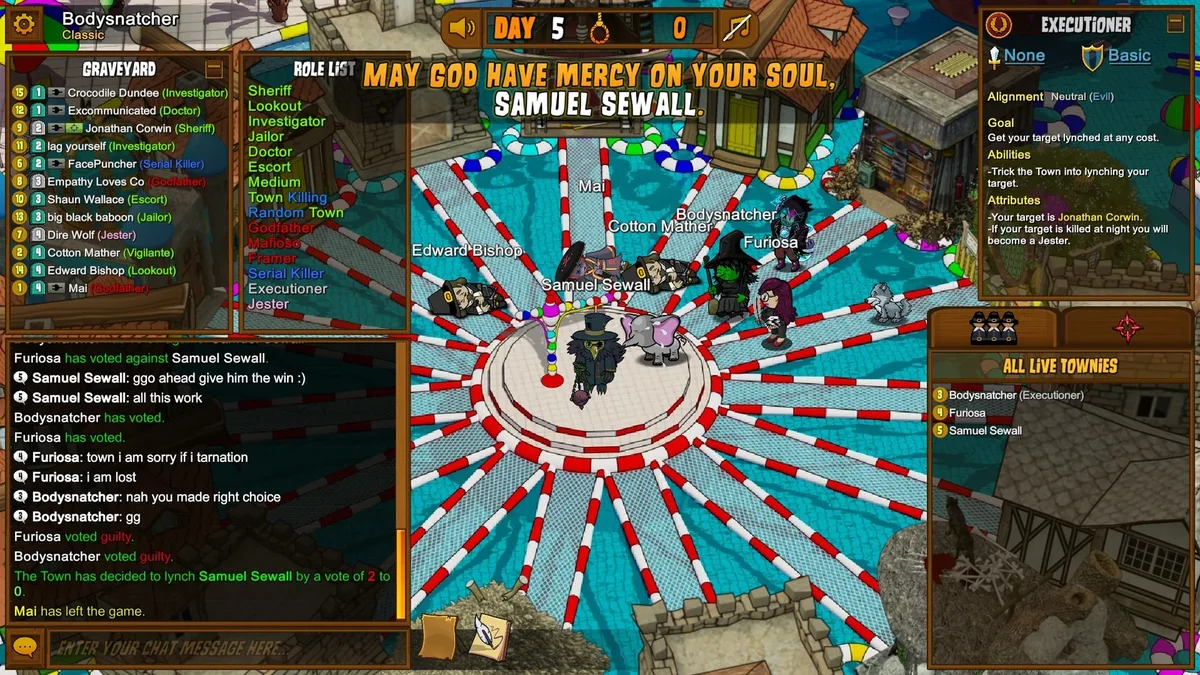
A match has 7–15 players with hidden roles. Town works to remove its enemies; Mafia and Coven coordinate as factions; Neutral roles follow their own victory conditions. The original game and its Coven expansion use different rules from Town of Salem 2.
Night creates private information: investigations, protection, control, attacks, visits and role-specific effects. Day turns those private results into public claims. The game becomes a contest over which story is compatible with the most evidence.
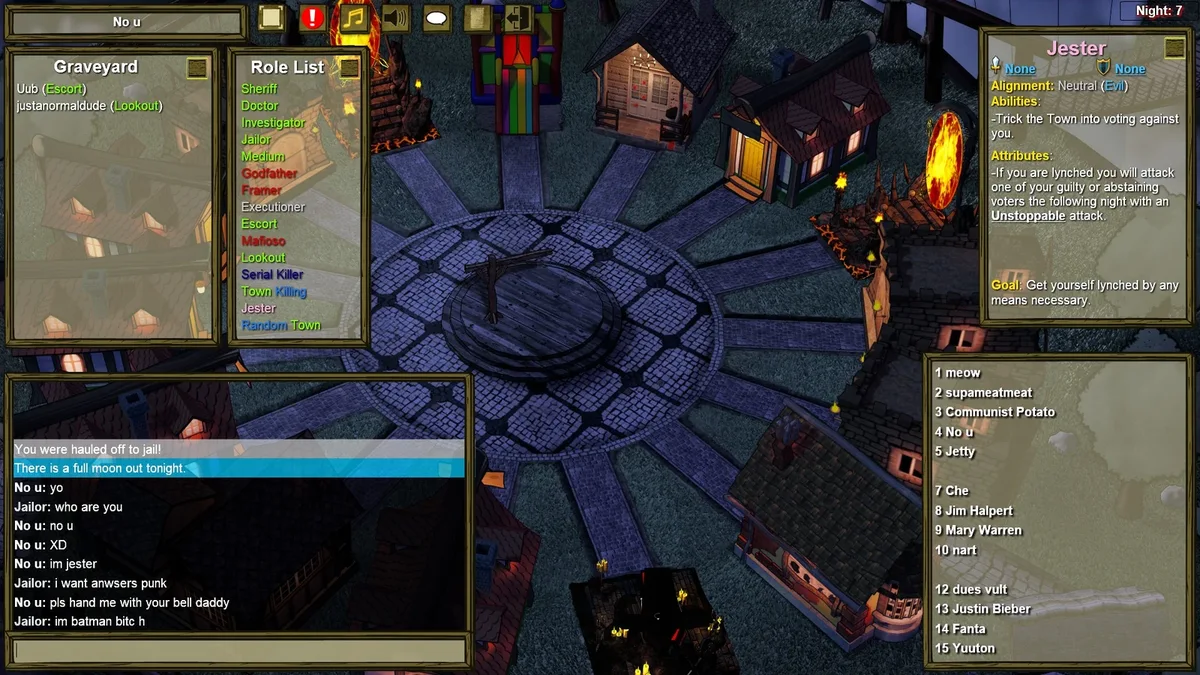
Create hidden interactions and mechanical evidence.
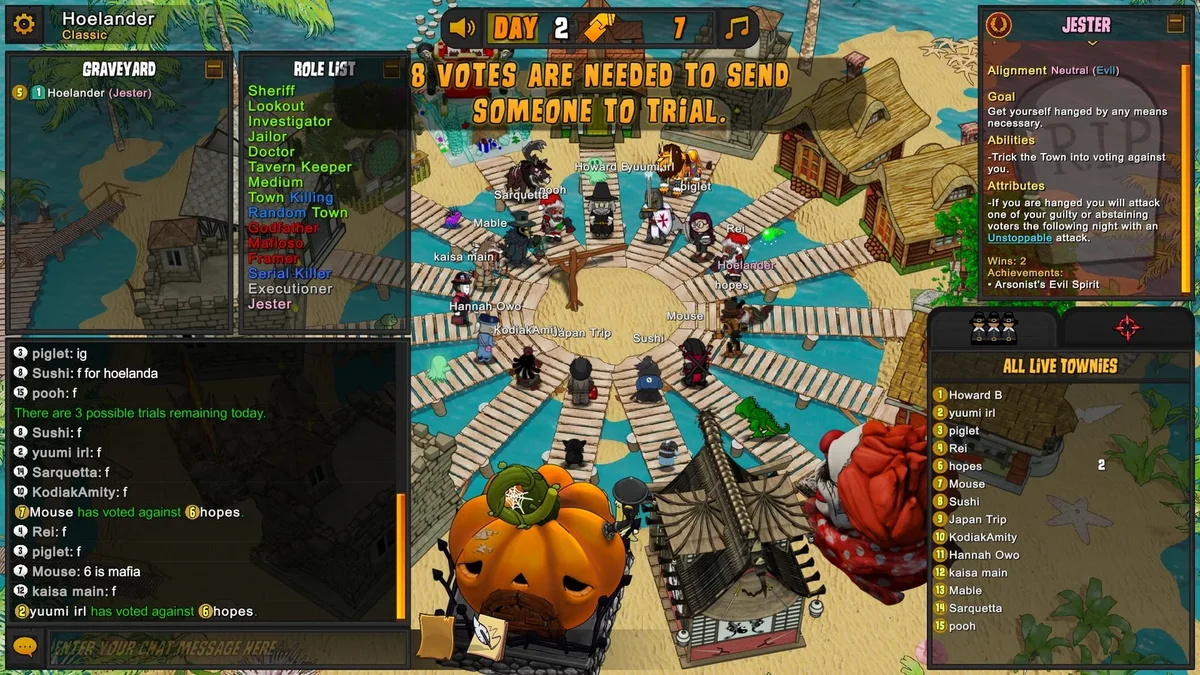
Turns logs and claims into questions that can be tested.
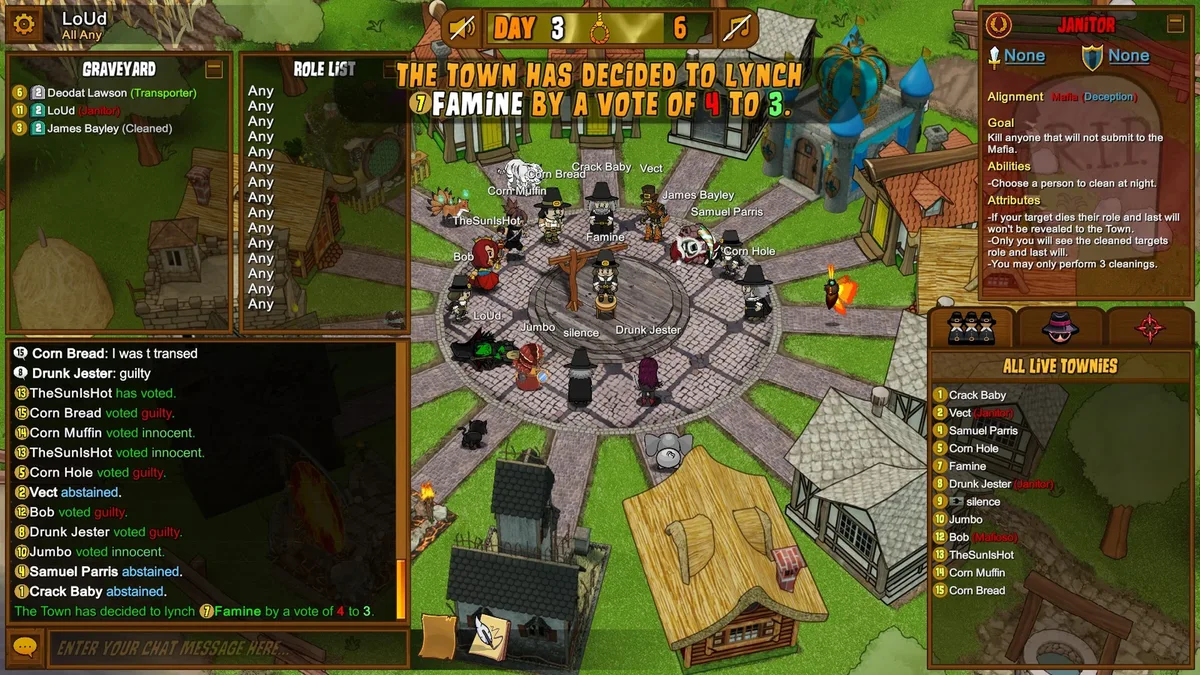
Convert uncertain reads into irreversible board changes.
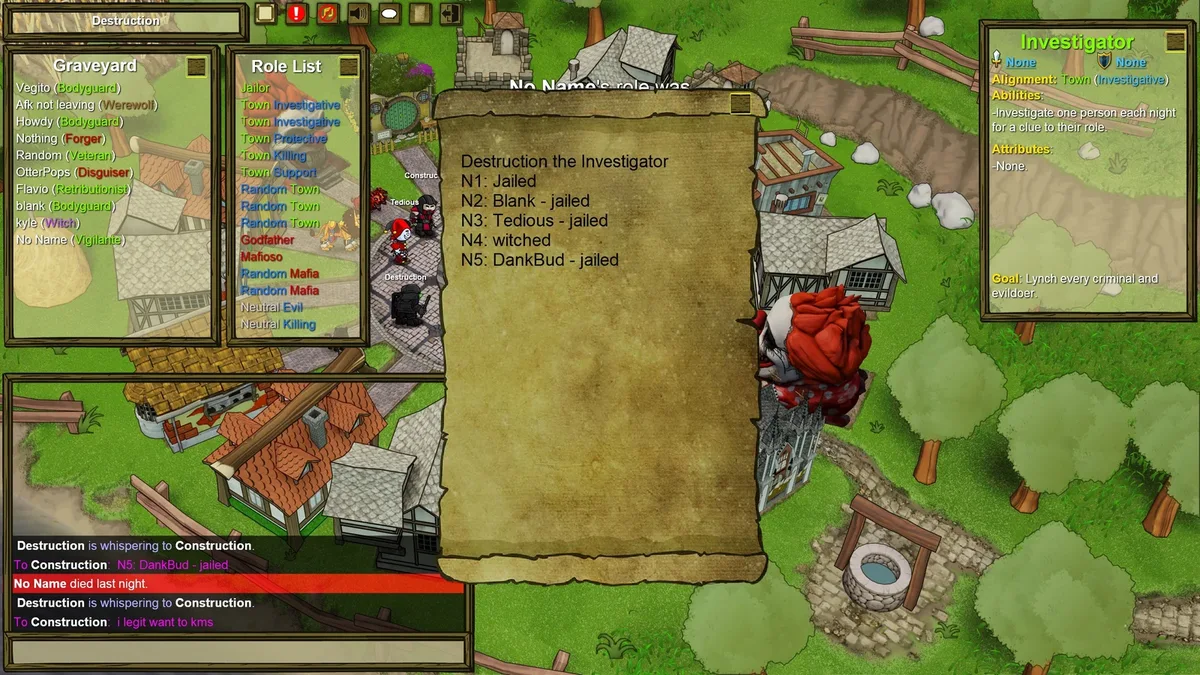
Preserve information after a player dies.
Start with roles that teach the game’s core skills
Compare an investigative check, a protective visit, a private jail and an independent win condition. Each role demands a different kind of evidence.
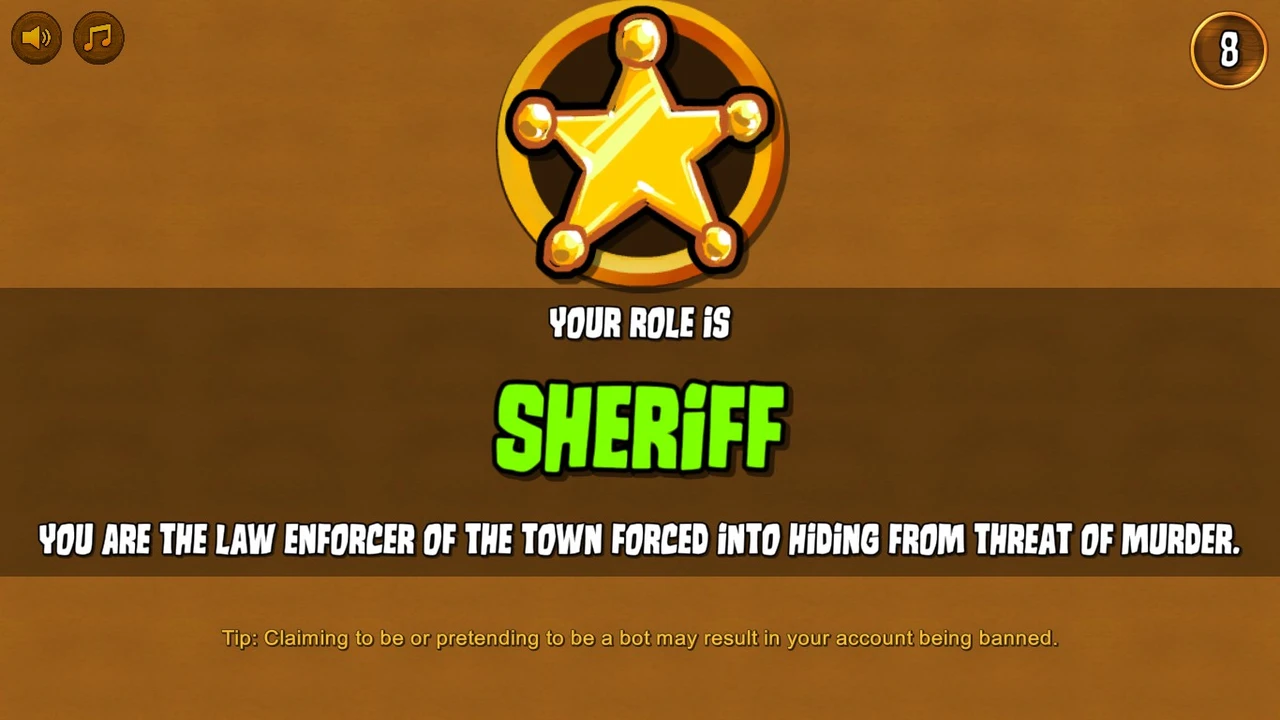
Sheriff
Check a player for suspicious activity and publish results in context.
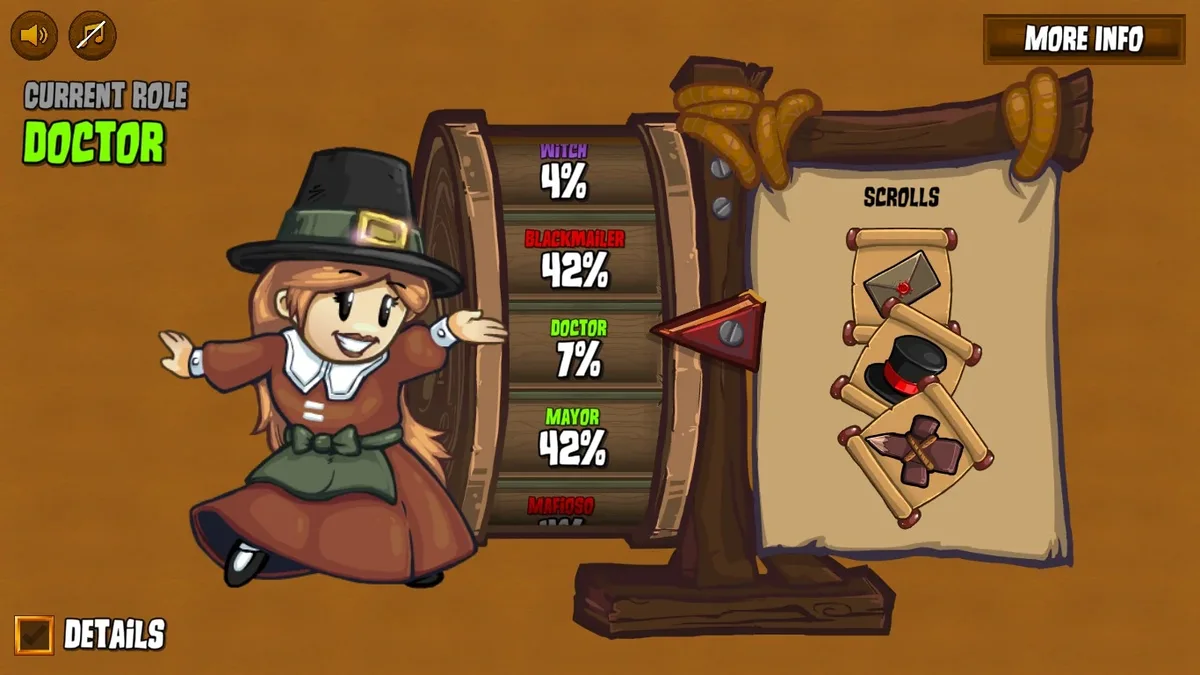
Doctor
Heal a player and prevent a lethal attack when your read is correct.
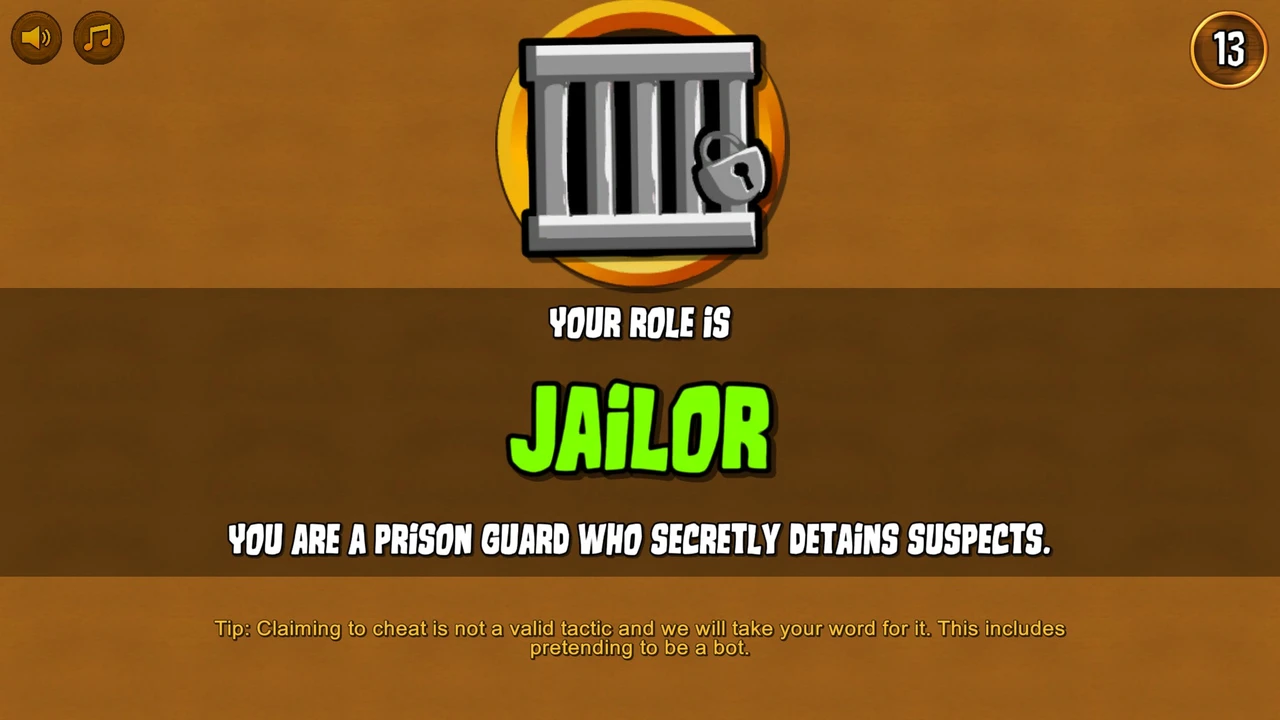
Jailor
Detain a player for private questioning and execute when evidence is strong.
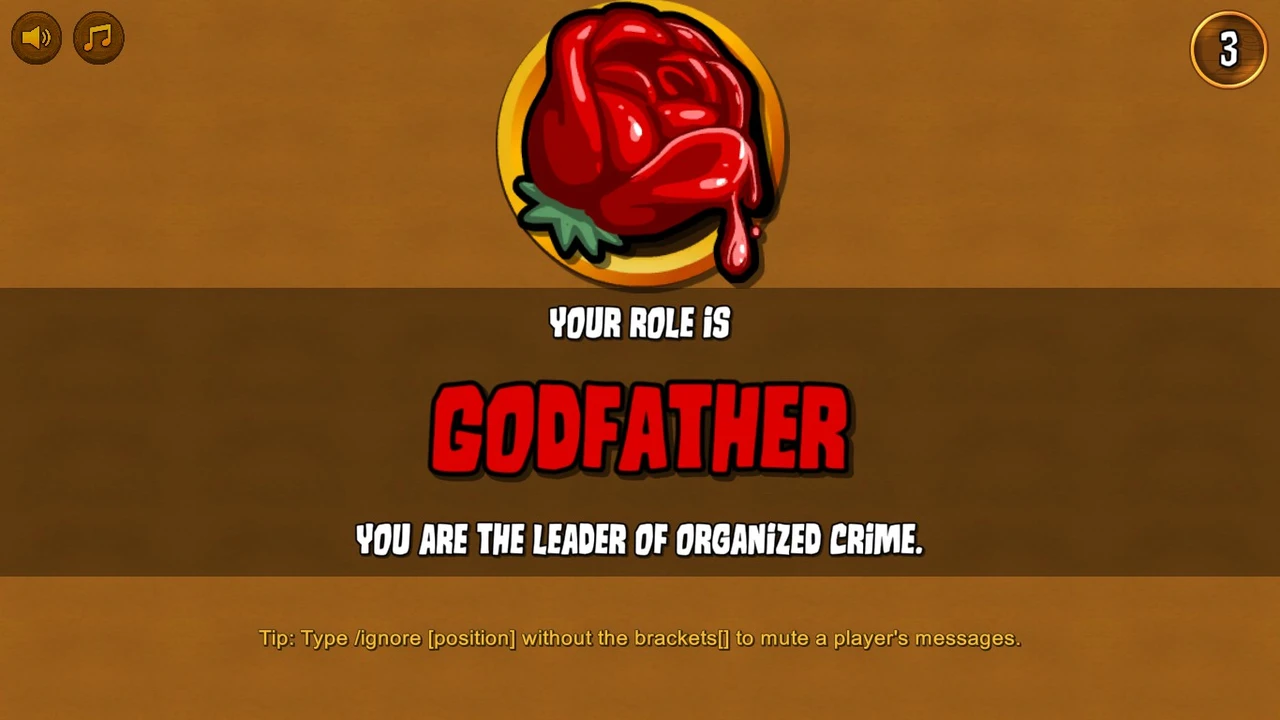
Godfather
Lead the Mafia kill plan while presenting a safer public profile.
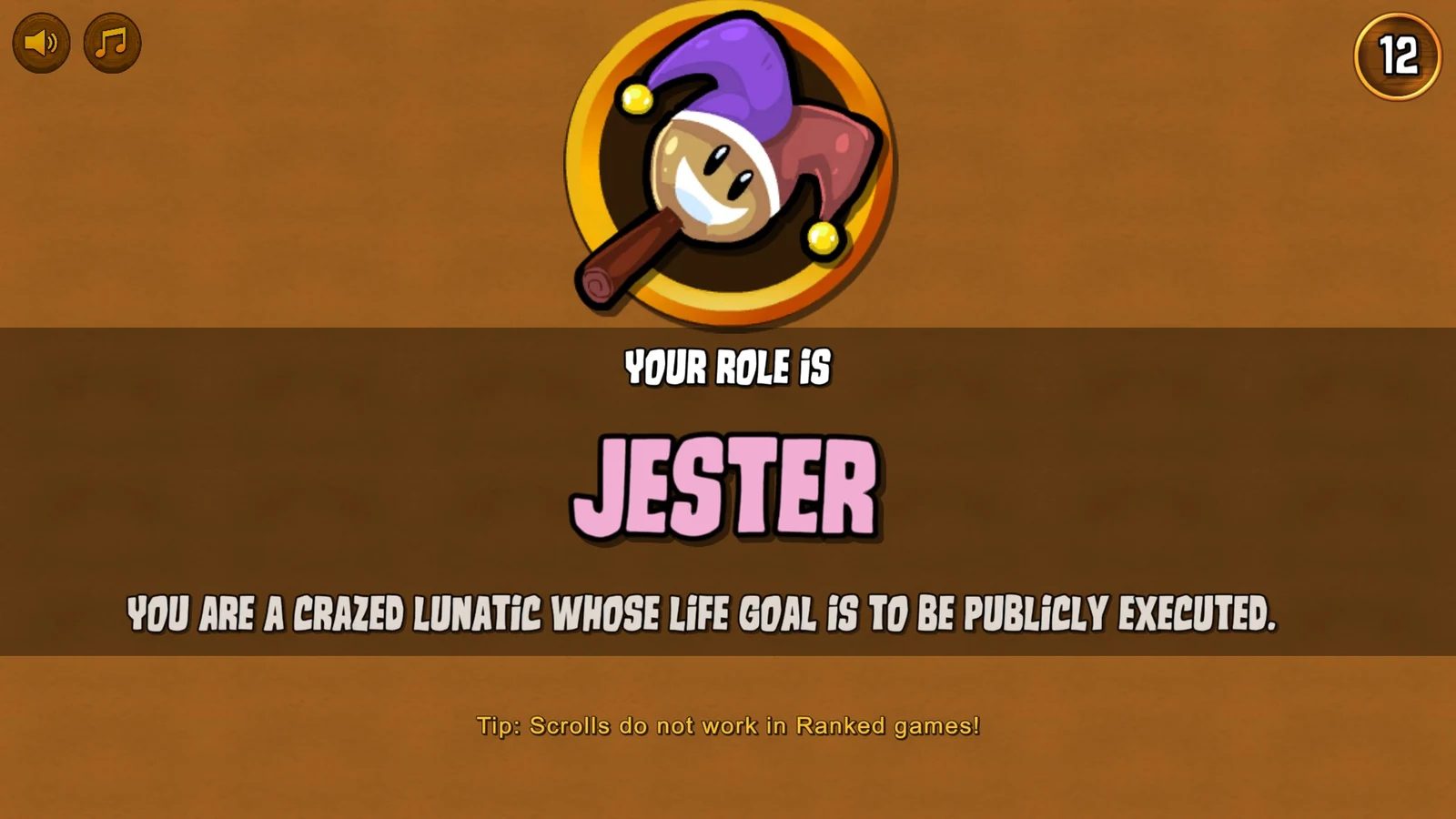
Jester
Get yourself eliminated by Town without making the plan too obvious.
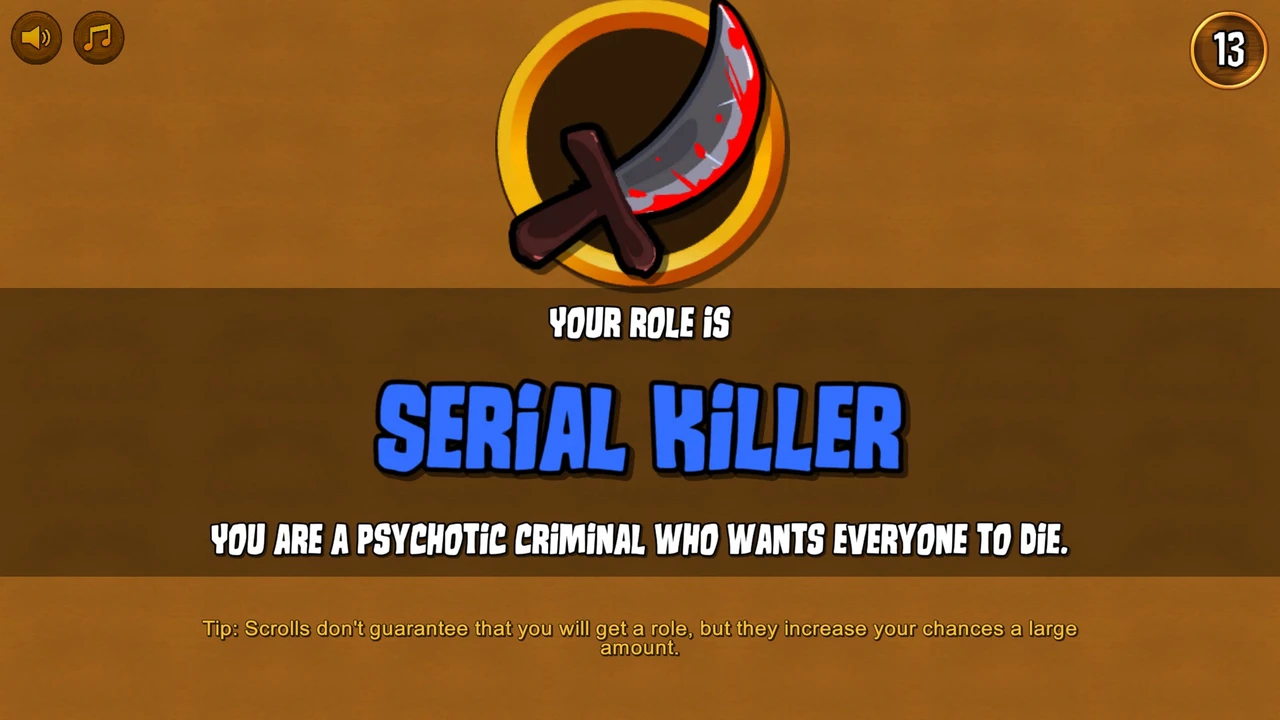
Serial Killer
Kill independently while avoiding both Town and Mafia control.
Know why an action failed before you call a player a liar
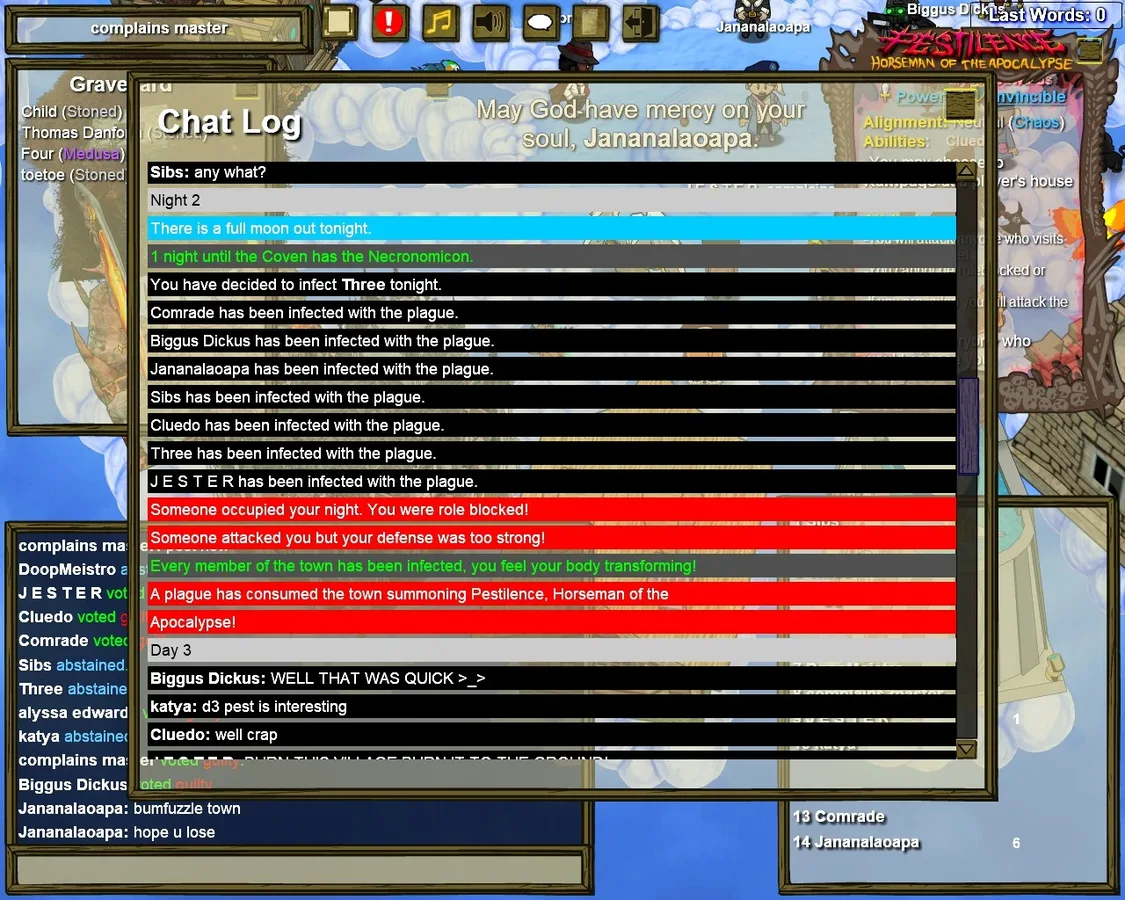
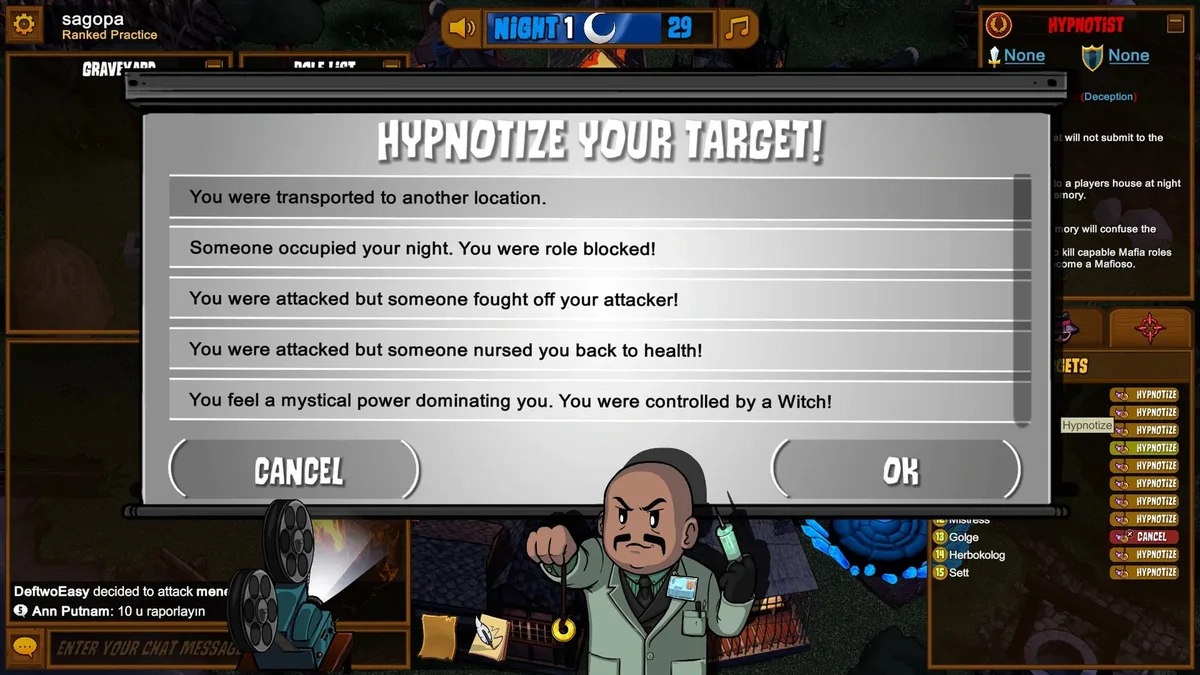
Town of Salem role interactions are easier to solve when visits, roleblocks, control, attack and defense, graveyard information, whispers and trial votes are tracked as separate evidence systems.
From your first will to final-three vote math
Keep result tables and will templates nearby, then use the strategy guides to decide when to claim, which contradiction to pursue and whether the next vote preserves Town control.
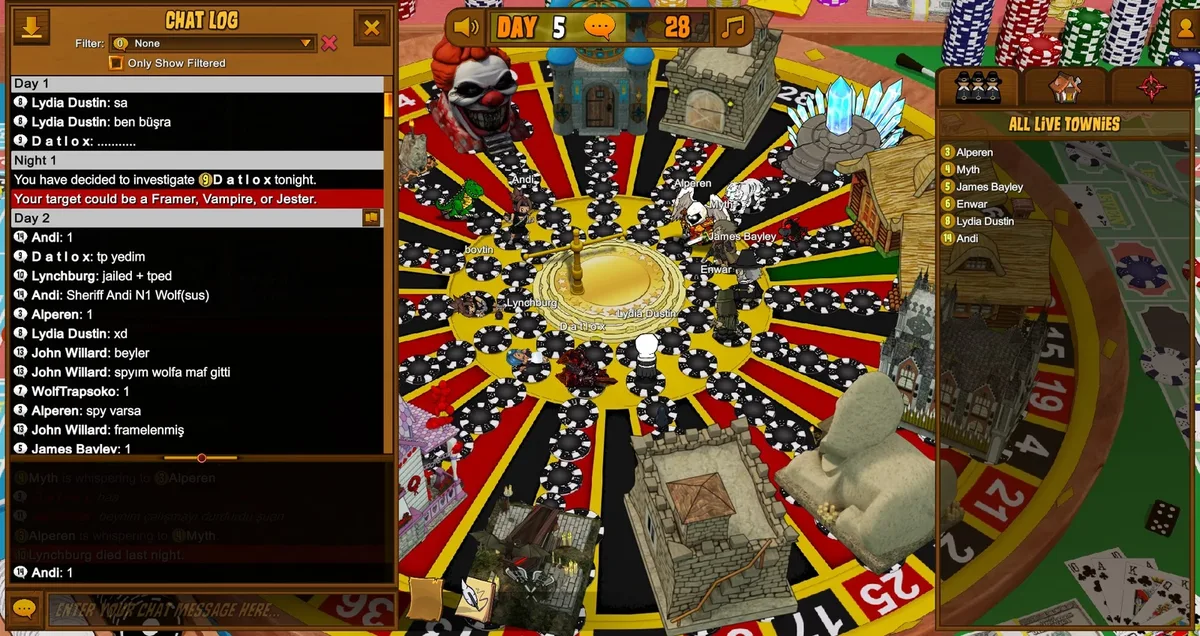
Investigator results
Classic and Coven result groups plus a method for turning broad clues into narrow claim space.
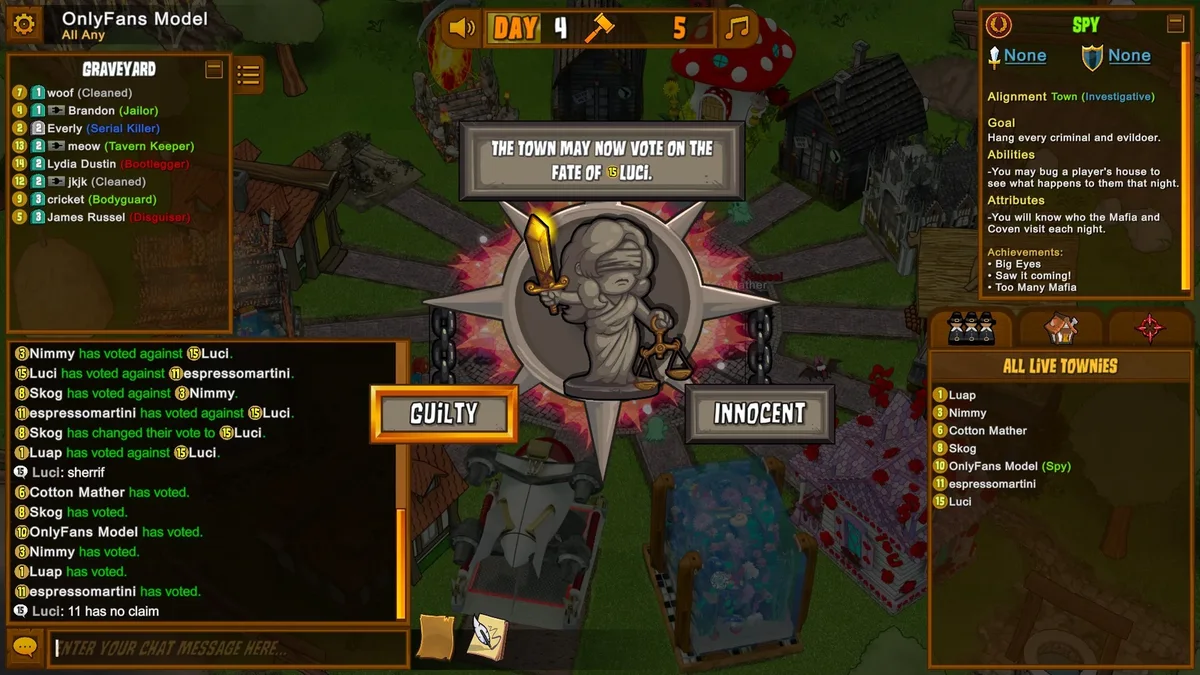
VFR / Vote for Role
Why it exists, how to respond and what the wagon tells you.
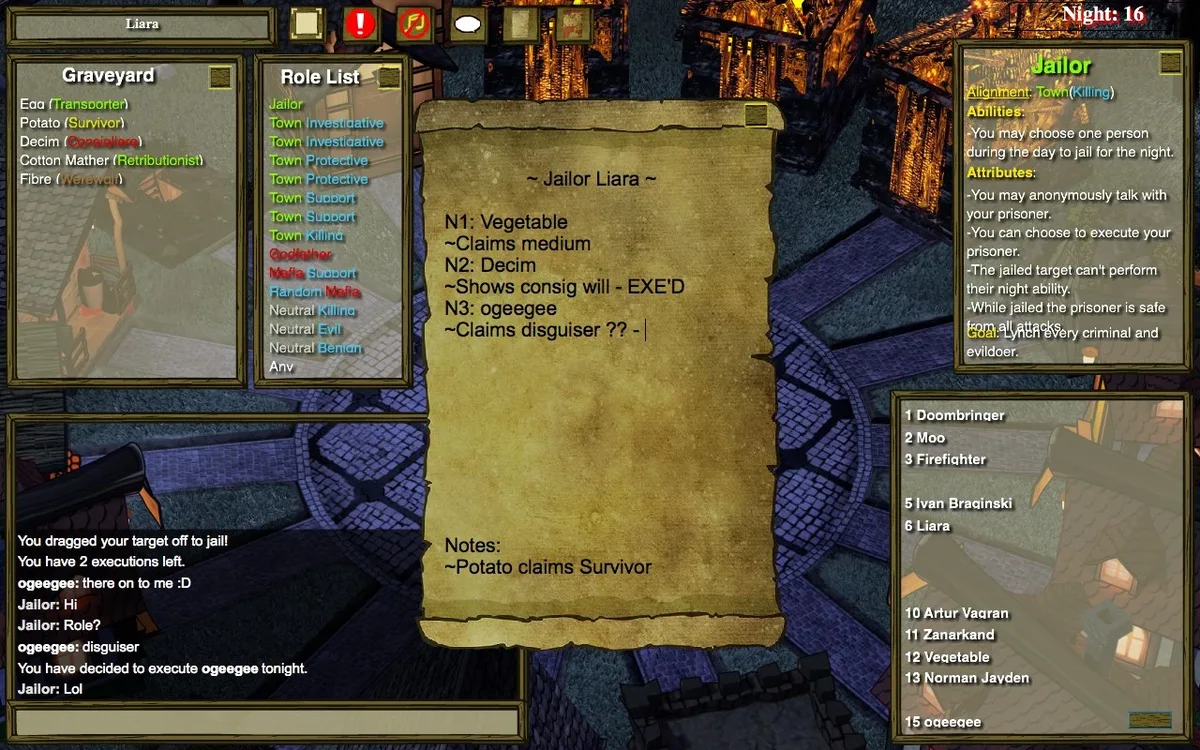
Last will templates
Compact formats for investigative, protective, support and killing roles.
Understand each faction before trusting a claim
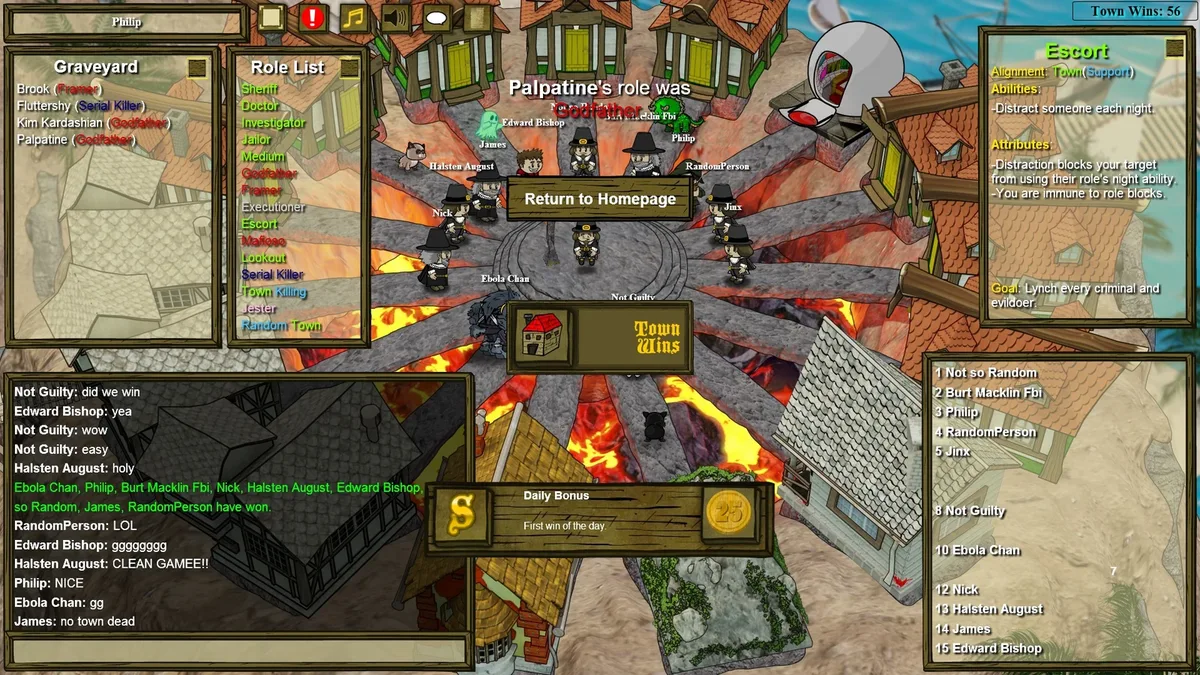
Town
Build public information, protect high-value roles and resolve contradictions before evil factions reach parity.
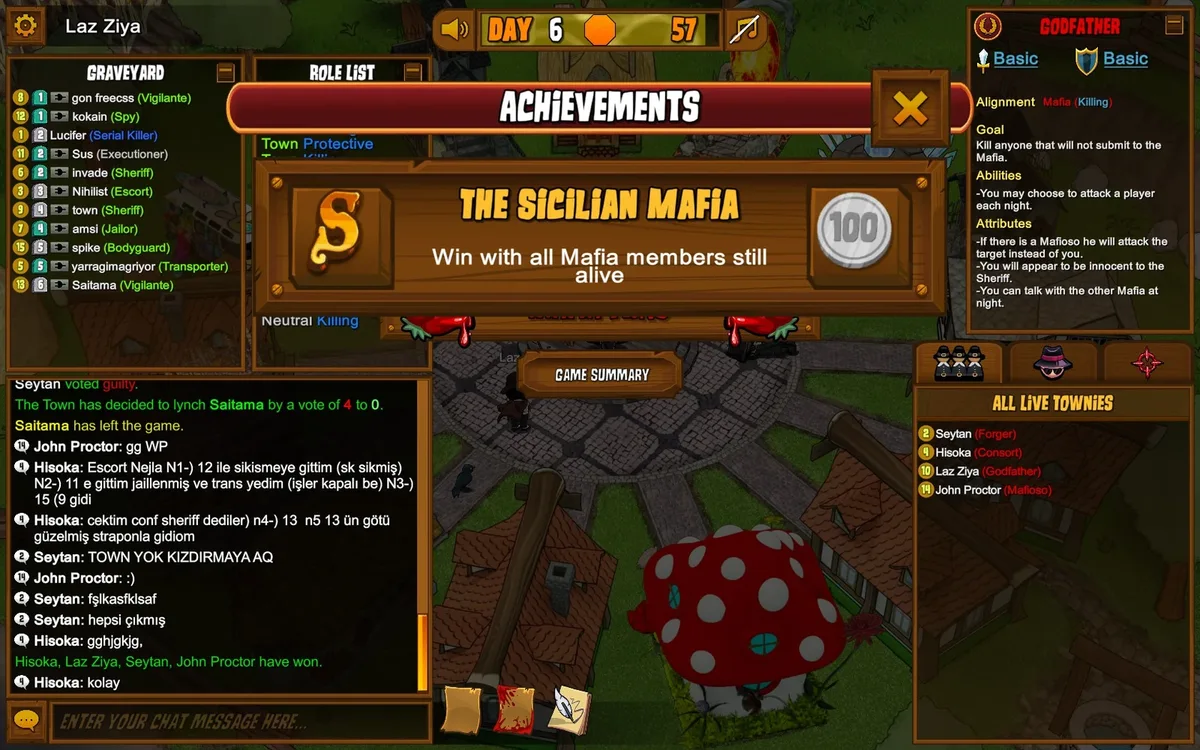
Mafia
Coordinate night kills, occupy claim space and corrupt the evidence Town needs to vote correctly.
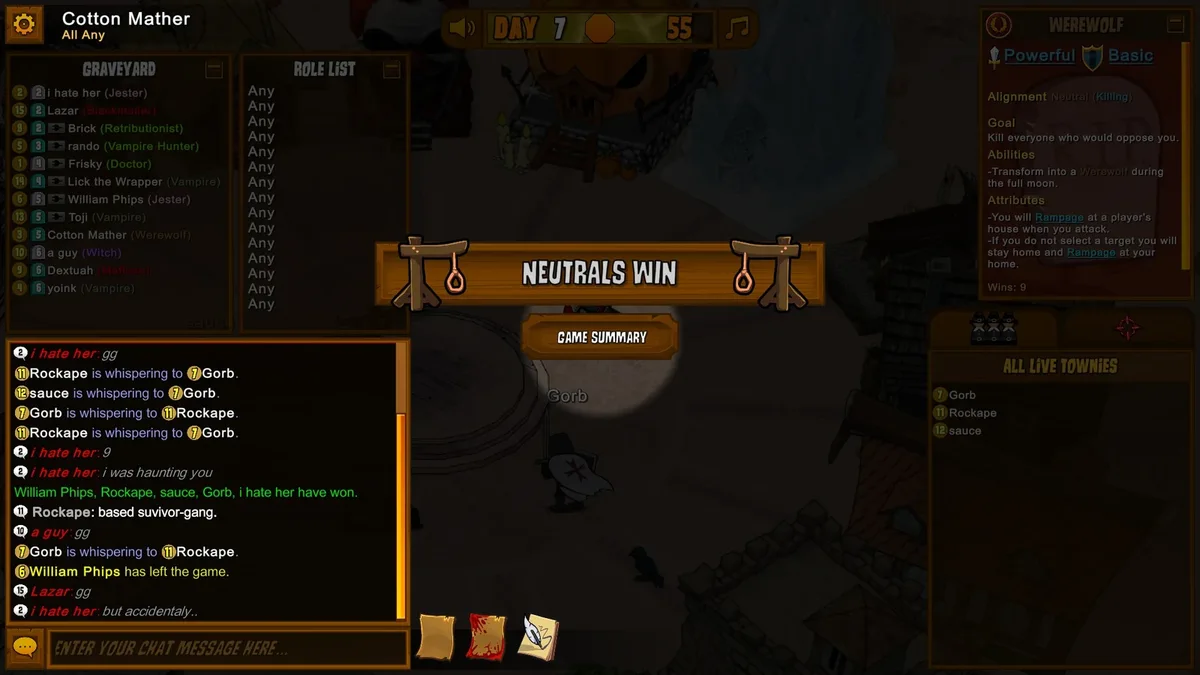
Neutral
Play the exact win condition: survival, a target elimination, transformation, conversion or independent killing.
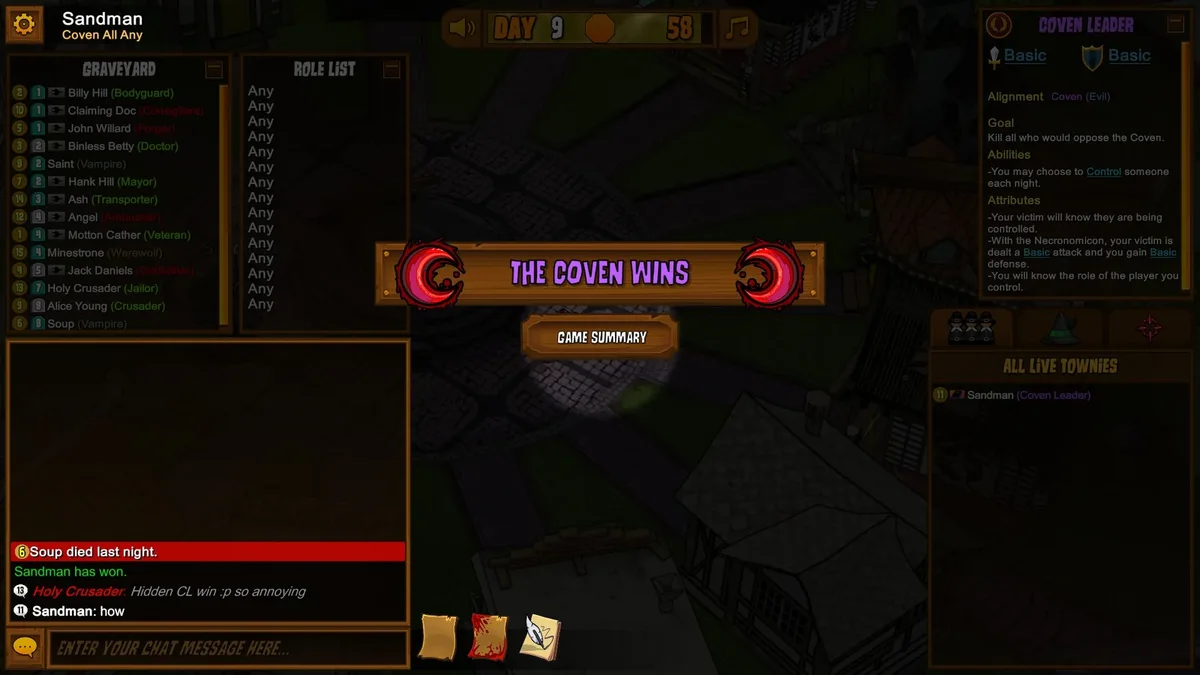
Coven
Coordinate spell effects and account for the Necronomicon in expansion modes.
Classic logic is not All Any logic
A role claim is only as strong as the setup around it. Structured lists create hard counterclaims; open modes keep possibilities alive longer. Coven increases interaction density; Custom can rewrite the assumptions completely.
The role list is evidence before the first night begins.
Every claim should be tested against what the current mode actually allows.
Open game-mode guide →Launch Town of Salem or compare other social deduction games
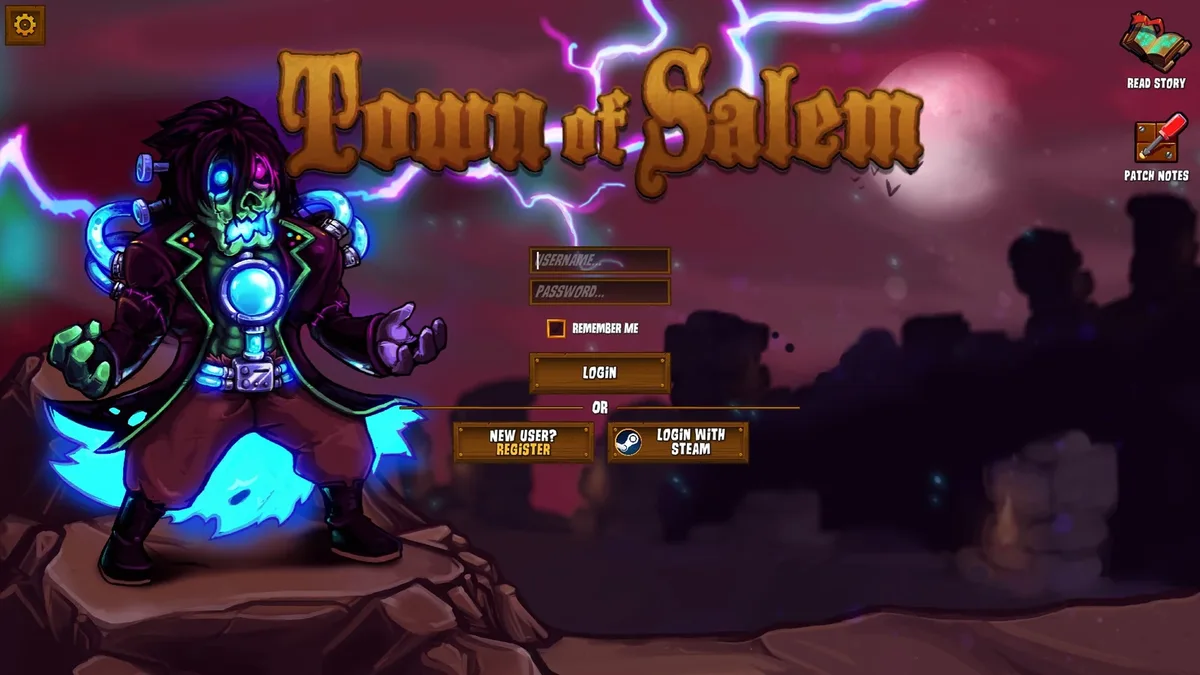
Play Town of Salem
Open the original game, choose a lobby and keep the role reference nearby.
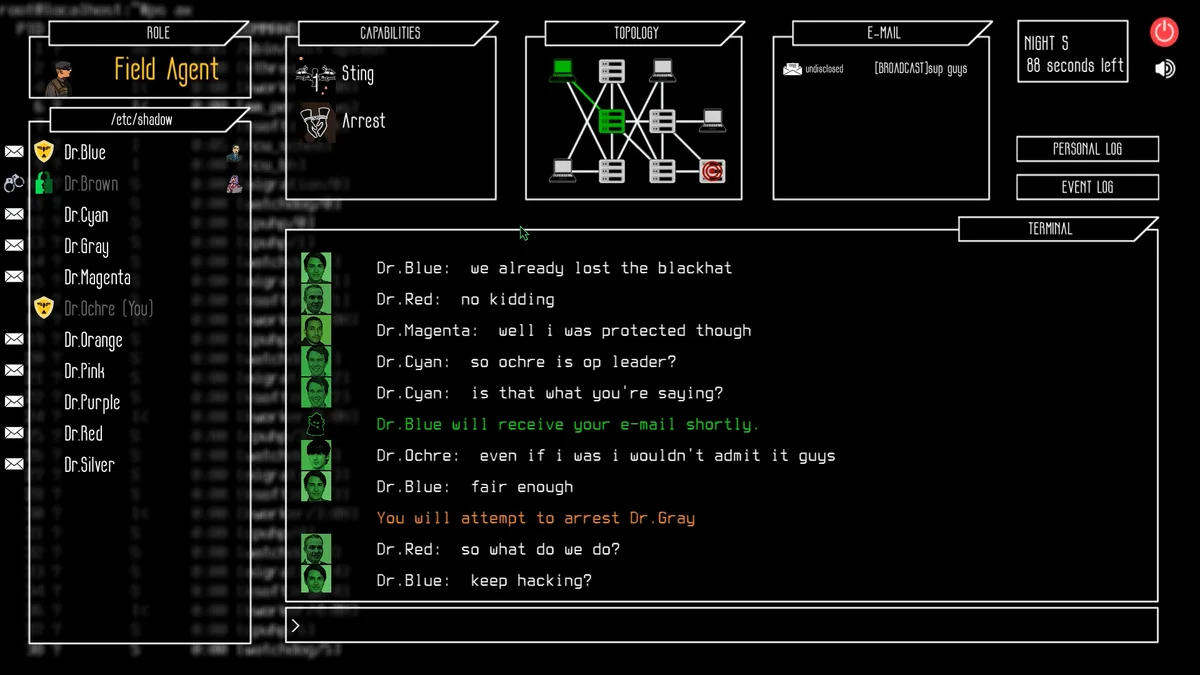
Untrusted
A hacking operation with an enemy inside: NETSEC must reach its objective while undercover Agents disrupt the team and conceal their allegiance.
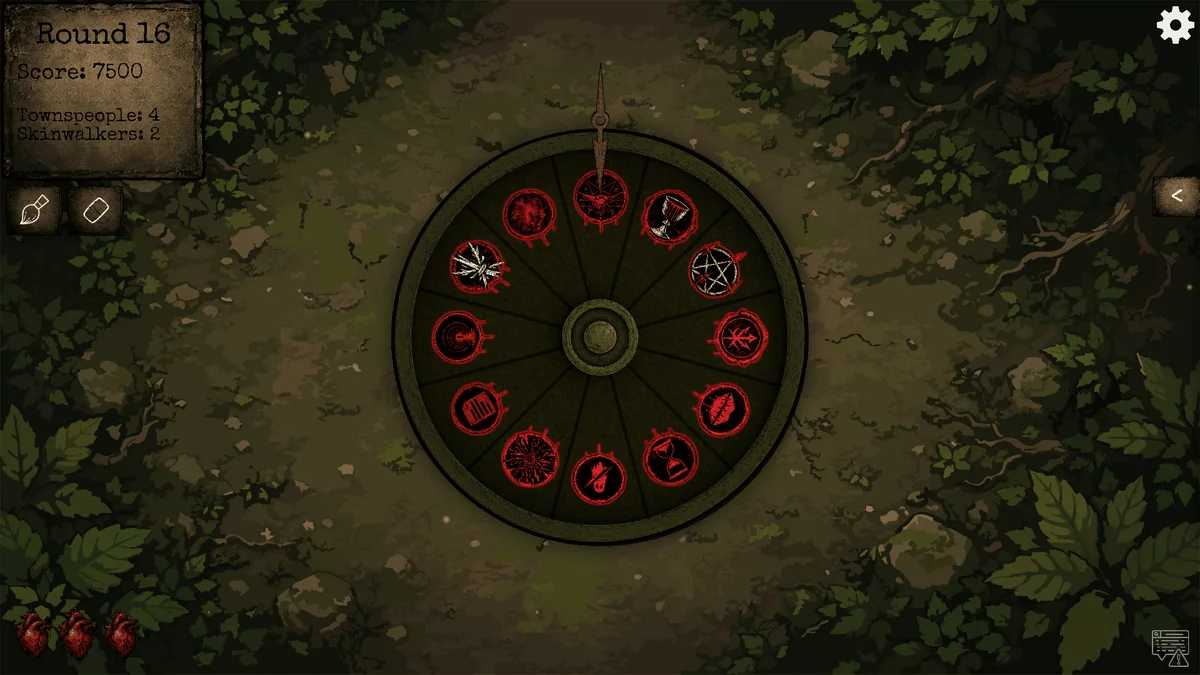
The Wrong Ones
Read villagers’ statements, look for contradictions and identify the Skinwalker in a compact, mouse-driven deduction prototype.
Town of Salem FAQ
What should a new Town of Salem player learn first?
Learn the day/night cycle, your win condition, how to keep a last will, and the difference between a fact, a claim and a read. Then add role-specific strategy.
What does VFR mean in Town of Salem?
VFR means Vote For Role: players use vote pressure to force a claim or will so the town gains public information. It should not be confused with blindly executing every player who reaches trial.
Where can I check Town of Salem Investigator results?
Use the Investigator results guide in the Strategy menu. It separates Classic and Coven result groups and explains how to interpret them against claims and the graveyard.
Are Sheriff results absolute proof?
No. Detection immunity and deception effects mean a suspicious or innocent result should be combined with other mechanical and social evidence.
