
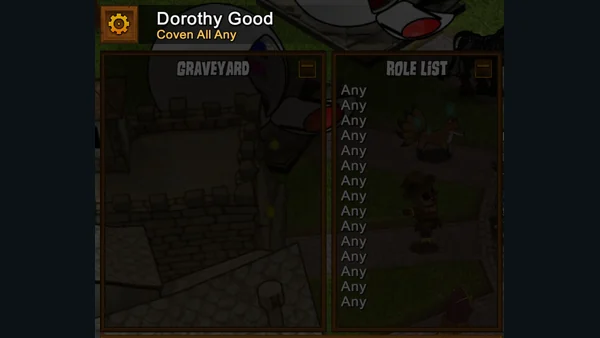
Why All Any feels different
In a structured mode, a claim can fail because a limited slot is already occupied. In Town of Salem All Any, unusual combinations and duplicate categories mean that “this role could exist” is a much weaker defense. Instead of asking only whether the role is possible, ask whether the player’s actions make sense in the world they are describing.
Prioritize interaction evidence
Visits, roleblocks, control, public abilities, attacks and protection outcomes create relationships between players. Those relationships are harder to fake consistently across several days than a role name alone. Build small evidence chains that do not all depend on one unconfirmed claim.
Claims need more detail, not more confidence
Because claim space is broad, a bare role claim carries less weight. Chronological night targets and exact feedback become more important. A player who can explain how their results connect to public events is easier to evaluate than one who simply repeats that their role is possible.
Behavior matters—but anchor it
Scumreading has more value in open setups, but behavior should still be tied to incentives: who benefited from a wagon, who changed a claim after a death, who avoided a testable target, and who kept a partner alive at a critical threshold. Avoid turning tone into proof.
All Any endgames
Do not assume the remaining factions from a standard setup. Reconstruct the living win conditions from confirmed deaths and observed powers. When the role pool is open, endgame planning begins with “what can still exist?” before “who sounds evil?”
What a duplicate claim does and does not tell you
Two Doctor claims are not automatically a counterclaim in All Any. The open pool may permit both. Ask each player for a separately recorded heal history, then compare it with attacks, visits and other feedback. A second ordinary role can be legal even when the same pair would exhaust a fixed list.
Openness does not erase unique-role restrictions or ability limits. A player still needs a legal role and a plausible action history. Similarly, one dead Mafia member does not establish how many Mafia remain; reconstruct the faction balance without importing a standard queue’s starting numbers.
