
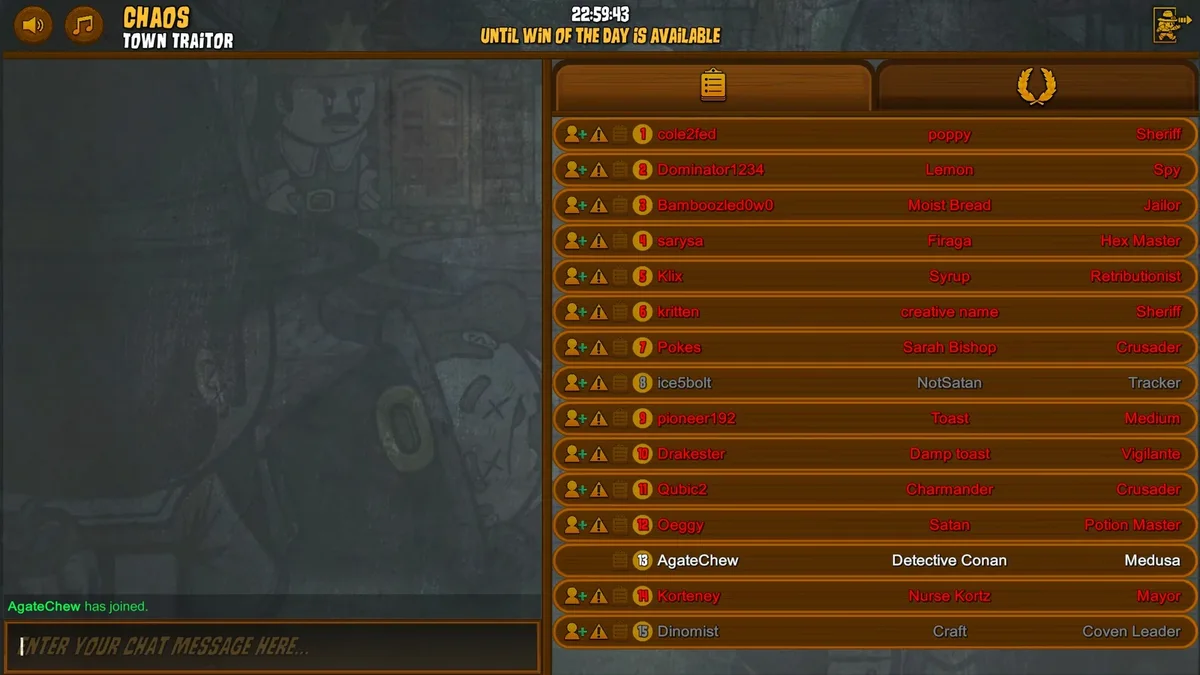
Town of Salem cheat sheet: the six things to track
Keep six columns in your notes: player number, role claim, night history, investigation results, public interactions and votes. Keep each claim separate from the feedback or observation supporting it.
1. Phase checklist
During the night phase, record your target before the result appears. At the start of the day phase, record deaths and revealed roles before reading new claims. During discussion, update claim space. During the Town of Salem defense phase, compare the accused player’s chronology with prior messages. During the Town of Salem judgement phase, count what a guilty or innocent vote does to the next night.
2. Claim shorthand and abbreviations
Common abbreviations include N1/N2 for night logs, VFR for Vote for Role, and compact role names used in fast chat. Do not rely on shorthand you cannot explain: the glossary is linked below so a new player can decode terms before using them in a claim.
3. Investigation results
Investigation results are constraints, not automatic convictions. Use the dedicated Investigator results and Sheriff results pages for the current result logic, then compare each result with the target’s claim, the role list, visits, graveyard and known deception effects.
4. How to claim in Town of Salem
A compact claim guide starts with role, then chronological night actions, then the one piece of context that explains an unusual result. If pressured by VFR, answer the actual question instead of arguing about whether pressure is fair. A claim becomes useful when another player can test it.
5. Role priorities
Role priority is situational. Investigative roles should target unresolved players, protective roles should preserve information and high-value vote power, and killing roles should avoid trading a limited attack for a target that can be resolved safely by trial. Evil factions should prioritize players who can verify others, close claim space or control the next vote.
6. Endgame check
Before the final trial, count living players by plausible faction, current killing power, protection, control and vote weight. The best cheat-sheet habit is simple: do the next-night math before committing to today’s irreversible elimination.
Three checks before clicking guilty
| Check | What to ask |
|---|---|
| Claim | What is the role, night log and actual feedback? |
| Contradiction | Which two statements cannot both be true after allowing legal redirects or deception? |
| Consequence | Who remains after the hanging and the next likely night? |
Nomination needs a majority of living voting power. Conviction needs more guilty than innocent voting power; an equal split acquits. An abstention is neither. A revealed Mayor contributes three votes, so count voting power rather than only names.
