
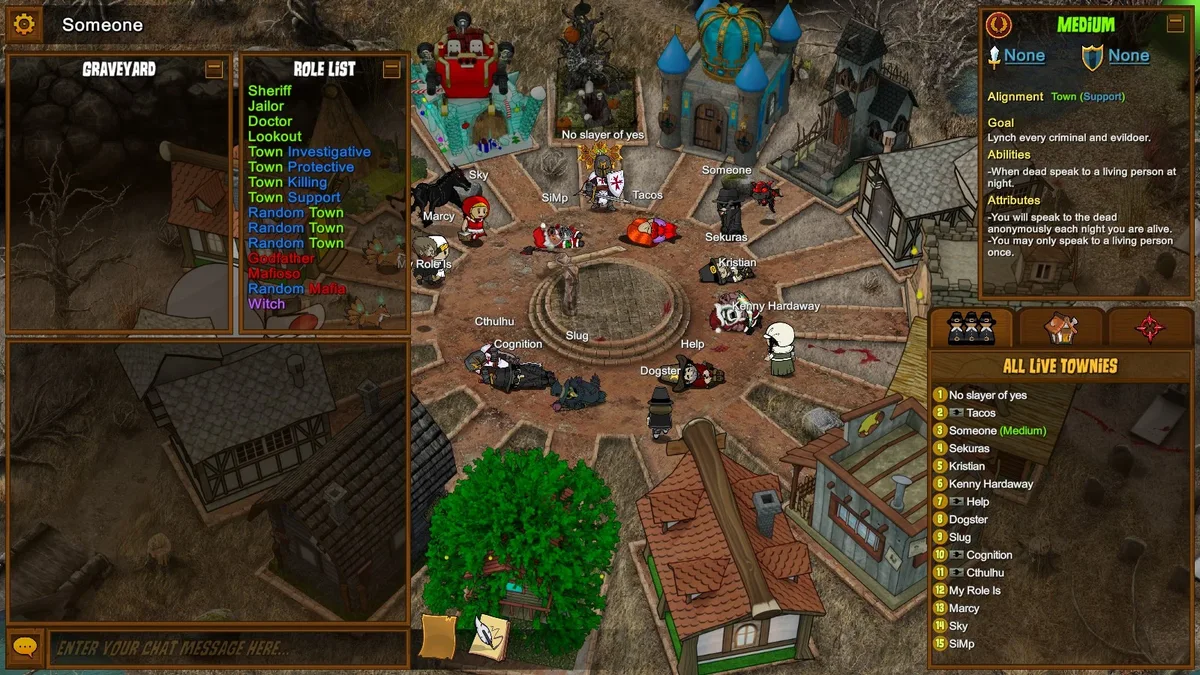
Dead chat and the final living contact
- The Medium can hear the dead while alive.
- The official role reference includes a once-per-game conversation with a living player after the Medium has died.
- Dead players may know night results, claims or context that the living never received.
Ask for details the living can check
Early game
Build credibility before the graveyard becomes crowded. Recording who died, what role they flipped and what information they claimed makes later dead-chat reports easier to separate from invented stories.
Mid game
Ask dead players for details that can be verified: last targets, exact results, who they suspected and whether a living claimant is misquoting their will. Graveyard chatter is most valuable when it produces a testable statement.
Endgame
If you die with a meaningful unresolved clue, plan the one living contact carefully. The best message is short, actionable and tied to a decision the living players can still make.
Name the speaker behind each dead-chat report
A Medium claim becomes stronger when it relays information only the dead player would reasonably know and that later matches public mechanics. Avoid padding the claim with vague “the dead said X is evil” statements.
Corroborate information the source cannot post
Verify Medium reports against visible wills, role flips and surviving players’ timelines. Because the source is not directly visible to most living players, precise details matter more than confidence.
Important interactions
- Janitor can deny role and will information to Town, making Medium communication especially valuable when the cleaned player can still explain what happened.
- Retributionist also uses the graveyard as a resource, but through dead Town abilities rather than conversation.
- Forger changes last wills, so discrepancies between a dead player’s account and the displayed will can become meaningful.
Decision example: the cleaned Investigator’s result
A cleaned player tells you they were Investigator and gives the Night 1 result that never appeared publicly. If that result matches a later claim-space conflict, you can bring the specific target/result pair to Town rather than simply saying “the cleaned person was useful.”
Attribute the report to its speaker
Write “dead Player 5 says their final target was 8” rather than “8 is confirmed.” A dead evil player can still lie, and a dead Town player can still be mistaken. Naming the speaker, night and exact observation lets the living judge the report’s limits.
If two Medium claims exist, ask for independently recorded dead-chat details before either claimant hears the other’s account. Matching information may support access to that conversation; it still needs the game’s alignment and conversion context.
Common mistakes
- Relaying anonymous graveyard opinions as if they were confirmed mechanics.
- Failing to distinguish what a dead player knew before death from what they guessed afterward.
- Waiting too long to summarize critical information for the living Town.
