
An investigation after the argument
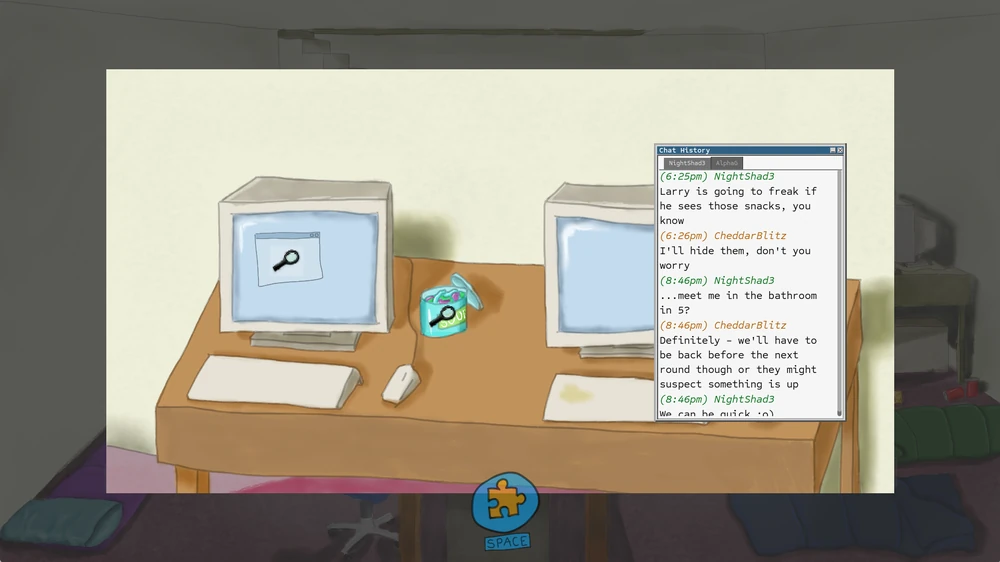
LAN Party ’97 puts you in the aftermath of a teenage gaming competition. A trophy is at stake, rules have been broken and the evidence is scattered around the party. The puzzle asks you to identify the people involved and explain the violations. Ben Slinger and Trevor Scott originally made it for AdvXJam 2024.
For a Salem player, the interesting connection is reconstruction. A graveyard, a will and a voting record tell you different parts of one match. Here, objects and written clues serve a comparable purpose: a convincing explanation has to fit several records, not just one memorable accusation.
Separate the person from the screen name
When a mystery includes both names and handles, keep their relationships explicit. Do not silently treat a computer, a username and the person beside it as the same piece of evidence. Establish the connection and then use it. A plausible association can otherwise spread through several later answers before you notice the original guess.
A simple three-column note can help: identity, supporting clue and unresolved question. This is an optional way to organize your reasoning, not a requirement imposed by the game. It is particularly useful when several clues appear to point toward the same person for different reasons.
Reconstruct the order of events
Distinguish motive from opportunity and opportunity from proof. Wanting a trophy explains why someone might break a rule; it does not establish that they did. Look for the sequence that connects intention, action and the evidence left behind. A timeline should survive being read backward as well as forward.
That habit transfers to Salem night-action analysis. When two stories appear inconsistent, first ask whether they describe the same moment. A correct observation from one stage of the match may support a mistaken conclusion about a later one.
Inspect before filling the gaps
Read a clue in its surrounding context before using its shortest phrase as an answer. Revisiting a room after you understand a new identity can make an earlier detail meaningful. If your explanation depends on an assumption you cannot point to, leave that part open instead of forcing every blank to look finished.
Choose this for deliberate clue reading
This is a solo mystery with a fixed setting, rather than a round of live deception against other players. It suits the part of Salem that involves comparing records and exposing inconsistencies. For practice dealing with people who can actively change their story, try Untrusted or return to the Town of Salem game.
