
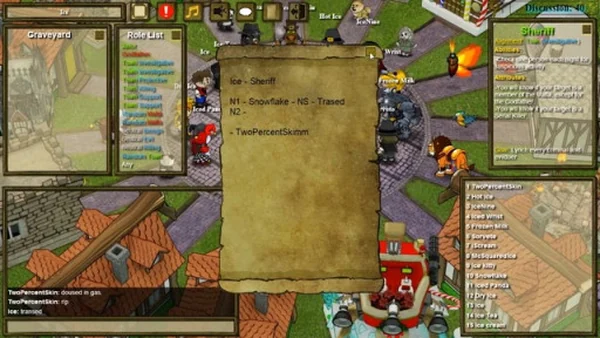
Use a stable nightly format
Choose one format and keep it: “N1 – target – result/action.” Consistency makes missing nights or changed targets obvious and lets Town compare your log with Lookout, Spy, Transporter and death information quickly.
Preserve exact result wording
Sheriff should record suspicious/innocent, Investigator should record the result group, Doctor should note attack feedback, and Transporter should list both players. Rewriting the game’s message into a stronger conclusion destroys useful nuance.
Add reasons only when they explain an odd choice
A Bodyguard can write “guarded 8 after the Mayor reveal.” A Doctor cannot heal a revealed Mayor, so the role matters. A paragraph defending every ordinary target is not. The will should remain scannable during a short trial timer.
Keep reads below the mechanical log
A separate “Reads” section can record suspicion and vote context. This prevents later players from confusing your opinion with an actual night result and makes forged alterations easier to notice.
Post before the will is forced out of you
If your role normally shares results, publish important information during the day. A perfect will shown only at trial is weaker because it could have been rebuilt from public events. Chronology includes when the information entered the chat, not just what the document says.
Good will structure
Investigator N1 – 3 – [result group] N2 – 8 – [result group] N3 – 11 – [result group] Reads: 8 claim fits group; 11 claim does not fit unless transport/frame explains it. The reader can immediately separate the three mechanical results from the interpretation.
Record a correction without rewriting history
N2: selected 4 — innocent
D3 correction: Transporter claims 4 ↔ 9.
Result may belong to 9; waiting for both confirmations.
The original selection remains visible, and the later explanation is labelled as a claim. Silently replacing 4 with 9 would erase the evidence needed to check whether the Transporter was truthful. If a later correction is disproved, the untouched original line still helps Town recover the night.
Common mistakes
- Writing a narrative instead of a timeline.
- Replacing exact feedback with your conclusion.
- Mixing opinions into the result lines.
- Waiting until trial to reveal information your role should have posted earlier.
