
Choose a claim that fits the role list
A fake role needs an open slot. Claiming a second unique or already-confirmed role creates an immediate mechanical fight. Strong evil players track the graveyard and choose covers that can coexist with what Town already knows.
Write the fake will in advance
A fabricated night log becomes fragile when it is invented only after pressure begins. Targets should make sense for that role on that night, and result wording should match the ruleset. Town can exploit hesitation by asking for the full will before revealing what contradiction it expects.
Respect information boundaries
A fake Sheriff should not know exact roles. A fake Investigator should not convert a group result into perfect alignment knowledge. A fake Doctor cannot claim attack feedback that the game would not provide. Too much information is often more suspicious than too little.
Use public events without copying them
Good fake claims explain public events but do not look reverse-engineered from them. If the victim died, claiming you investigated the victim is safe but low-value; if every result conveniently targets already-confirmed players, the will may be designed to avoid falsification.
Detecting a fabricated chronology
Ask when each result was written, whether it was posted before the flip, and whether the target choice made sense at the time. A fake claim often becomes “perfect” only after later information tells the liar what the result needed to be.
Spotting hindsight in a fake will
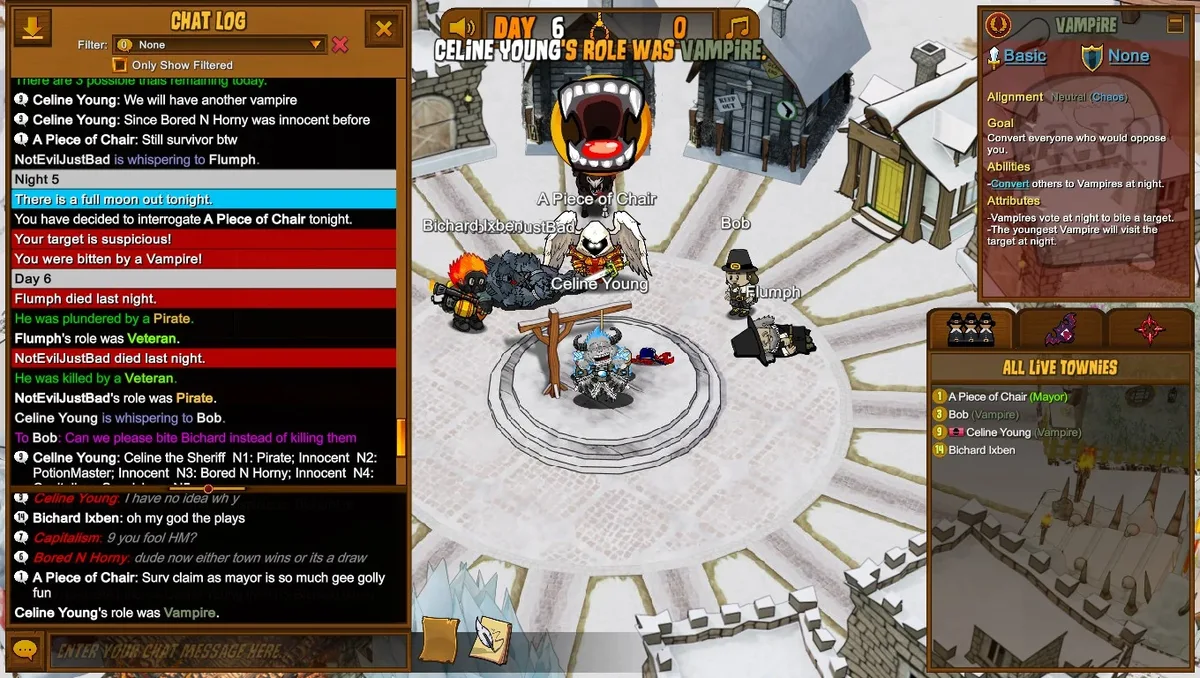
A player claims Investigator and says N2 they checked a person who died N3, producing exactly the result that matches the revealed role. Search the day chat: if the player never mentioned the N2 result until after the death, the result may have been written backward from the graveyard.
Common mistakes
- Choosing a cover role that has no open slot.
- Using exact role knowledge in a claim that should only produce a group.
- Targeting only players who later became publicly confirmed.
- Changing result wording after another player explains the mechanic.
