
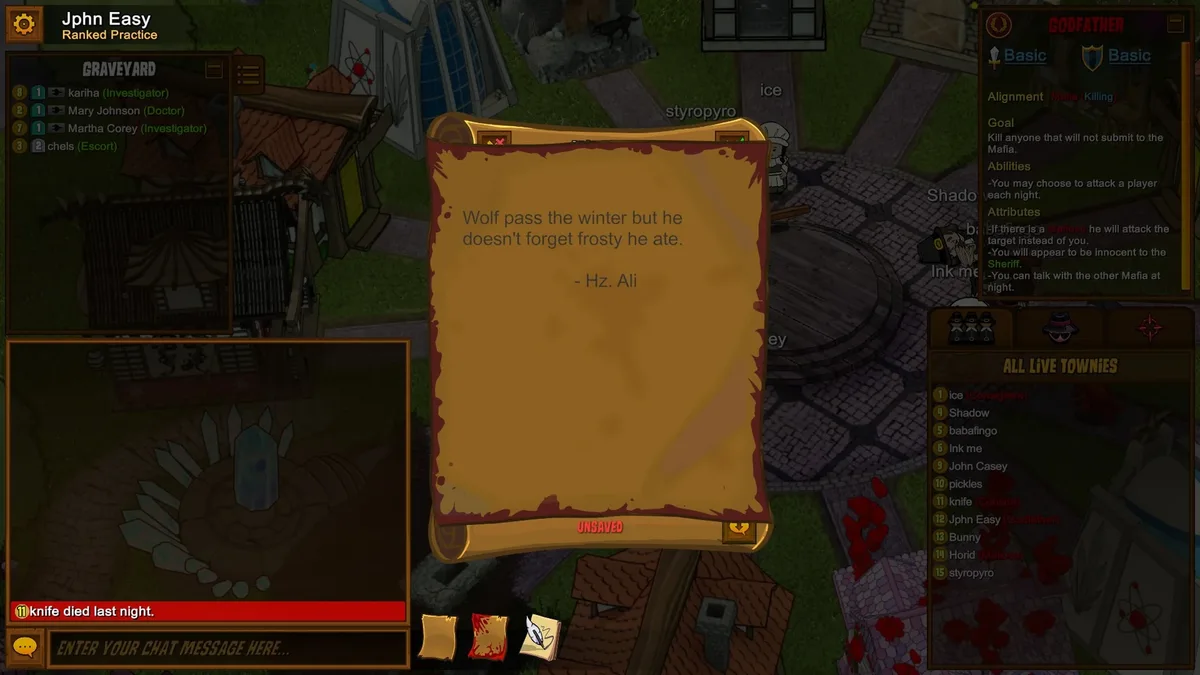
Understand the sender’s incentive
A killing role gains nothing from writing a note unless the message changes Town behavior. It may claim responsibility, frame another faction, taunt a target, signal a pattern or manufacture a clue. Start analysis with “who benefits if we believe this?”
Separate verifiable detail from theater
A note that references a public claim or obvious victim is weak evidence because anyone could know it. A detail tied to private night feedback can be stronger, but it may also reveal that the killer has an information partner such as Consigliere.
Use consistency across multiple nights
One death note can be bait. A sequence of notes may reveal target priorities, vocabulary, faction objectives or deliberate attempts to imitate another killer. Track patterns without assuming the writer is unable to change style.
Do not let notes override mechanics
If a note says “Player 7 is immune,” but visit logs and results point elsewhere, keep the note in the hypothesis column. Killers are allowed to lie. Death notes are most useful when they explain independent evidence rather than replacing it.
Writing notes as evil
If your ruleset and role allow a death note, decide what the note should accomplish before writing it. Misdirection should be plausible and should not reveal private Mafia information that Town could trace back to your faction.
Reading a manipulative note
A victim dies with a note claiming “Sheriff 4 is fake.” Player 4 has already posted a consistent will and a Lookout saw the claimed visit. The note creates a question, but the independent evidence is stronger. Town should ask why the killer wants attention on Player 4 rather than treating the note as a verdict.
Common mistakes
- Believing a death note because it sounds specific.
- Ignoring repeated note patterns that reveal target priorities.
- Writing notes that leak exact private role information.
- Using a note as a substitute for claim and visit evidence.
