
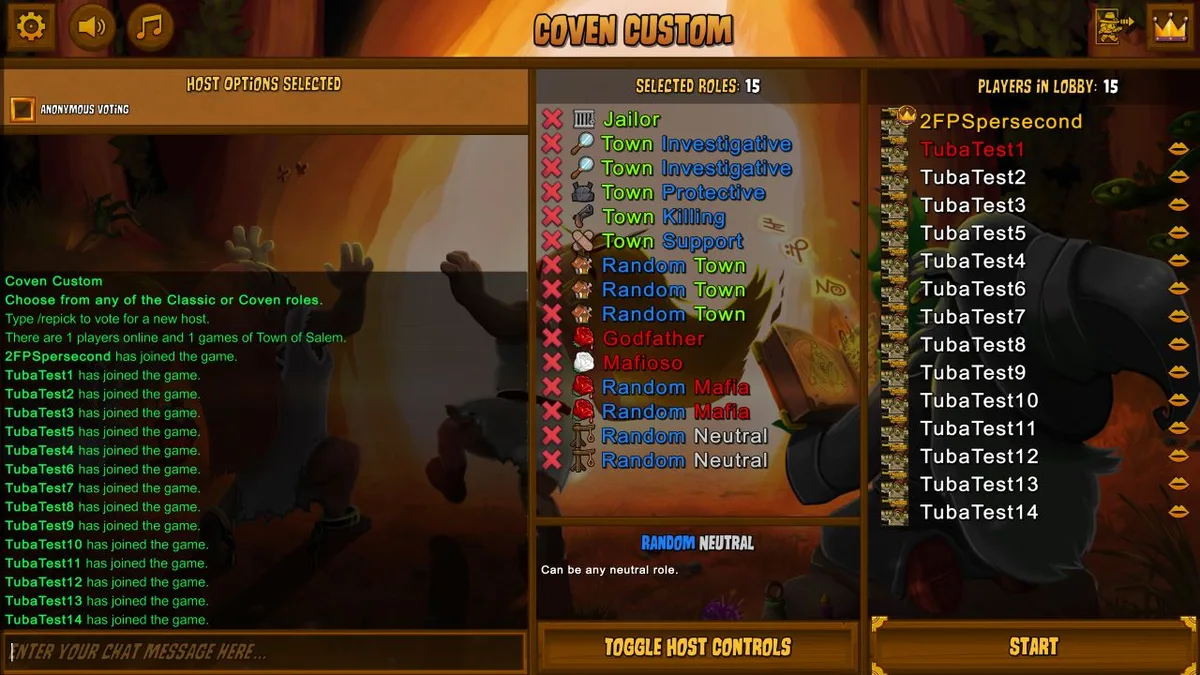
Read the setup before reading the players
Custom games can create role combinations that would be impossible or unlikely elsewhere. Your first task is to understand what alignments, unique roles and categories the host allowed. Every later claim should be judged against that configured universe.
Build a shared claim-space table
Write the available slots, confirmed deaths, hard claims and unresolved claims. This gives the lobby a common model and prevents two discussions from using different assumptions about what can exist. When a player counterclaims, show the exact conflict instead of saying “that role is impossible” without context.
Target priority changes with the setup
A role that is usually high-value may be less important when the custom list contains several substitutes. Conversely, one information role can become critical if it is the only reliable way to resolve a cluster of claims. Choose night targets by marginal information value in the actual lobby.
Expect unusual interaction chains
Custom setups can make roleblocks, transports, protections and kills stack in ways that ordinary queue habits do not prepare you for. Record intended targets, resolved targets and feedback separately. If a result looks impossible, check the setup before accusing the claimant.
Keep the win condition visible
Custom games are still won by meeting faction or role objectives. When the board becomes chaotic, return to the simplest question: which living powers can change the win condition tonight, and which vote removes the greatest immediate threat?
Design around the experience you want
A Custom lobby can be a learning setup, a chaotic party list or a focused mechanics test. Decide the goal first, then choose roles that create enough interaction to support it without making one faction obviously dominant.
Balance information and removal
Too many investigative roles can solve the board before evil has room to play; too many killers can end the match before claims matter. Mix information, protection, support and threats so each phase creates meaningful decisions.
Use Custom to learn interactions
Custom is useful for testing how Transporter, roleblocks, protection, control and investigative results resolve. A small purpose-built list can teach one mechanic faster than waiting for the same interaction to appear randomly in another mode.
